A sfoglia, the sheet of egg pasta rolled out by hand, does not have one correct thickness: it has one for every shape. The same dough rolled to a millimetre makes perfect tagliatelle and cappelletti as heavy as pebbles; rolled to half a millimetre it makes prizewinning cappelletti and tagliatelle that fall apart in the ragù. People who have been rolling pasta for years know it by heart and measure nothing. People who are starting out need numbers, and here they are.
Why thickness is not a detail
The thickness of the sheet decides three things: how much you feel the pasta in your mouth, how much sauce it can hold, and how well it stands up to cooking. A thick sheet dominates the plate and suits powerful sauces; a thin sheet almost disappears, leaving the stage to the filling or to the broth.
There is a question of shape too. Folded shapes, such as cappelletti and garganelli, stack two or three layers of pasta in the same spot: if the sheet is thick, that spot stays raw or rubbery. Flat shapes, such as tagliatelle and maltagliati, do not have that problem and can afford more body.
The table of thicknesses and measurements
The measurements that follow are the ones we use at home, and they match what you see at the village festivals and in the pasta workshops of Romagna. The thicknesses are for raw pasta. The machine settings are given for a roller with 9 positions, where 1 is the widest and 9 the narrowest: on a machine with 6 or 7 positions, scale accordingly.
| Shape | Sheet thickness | Cutting size | Setting (out of 9) | Typical sauce |
|---|---|---|---|---|
| Tagliatelle | 1 mm | Ribbons 7 to 8 mm wide | 6-7 | Ragù, thick sauces |
| Tagliolini | 0.5 to 0.8 mm | Ribbons 2 to 3 mm wide | 7-8 | Butter and sage, broth |
| Cappelletti | 0.5 mm or less | Squares of 4.5 to 5 cm | 8-9 | Capon broth |
| Tortelli and ravioli | 0.8 to 1 mm | Squares of 6 to 8 cm or half moons | 6-7 | Melted butter, light sauces |
| Cappellacci di zucca | 0.8 mm | Squares of 7 to 8 cm | 7 | Butter and sage |
| Garganelli | 0.8 to 1 mm | Squares of 3 to 4 cm | 6-7 | Ham and peas, ragù |
| Lasagne | 1 to 1.2 mm | Rectangles of about 10 x 15 cm | 5-6 | Ragù and béchamel |
| Maltagliati | 1 to 1.2 mm | Irregular diamonds of 2 to 3 cm | 5-6 | Beans, chickpeas, soups |
| Strozzapreti | not a sheet | Twists of 8 to 10 cm | none | Rustic sauces, sausage |
A millimetre, to give you a reference you can hold in your hand, is roughly the thickness of a ten cent coin. Half a millimetre is a sheet of light card.
Shape by shape
Tagliatelle
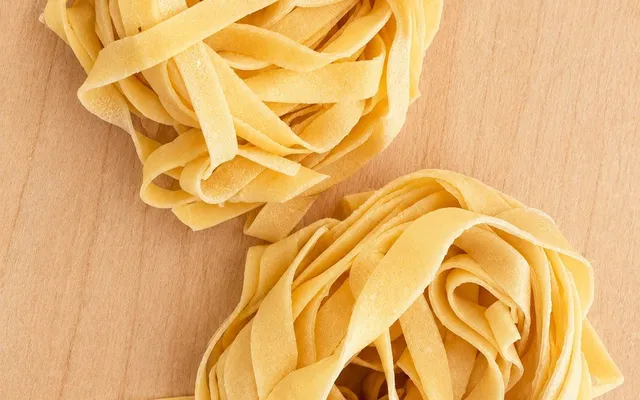
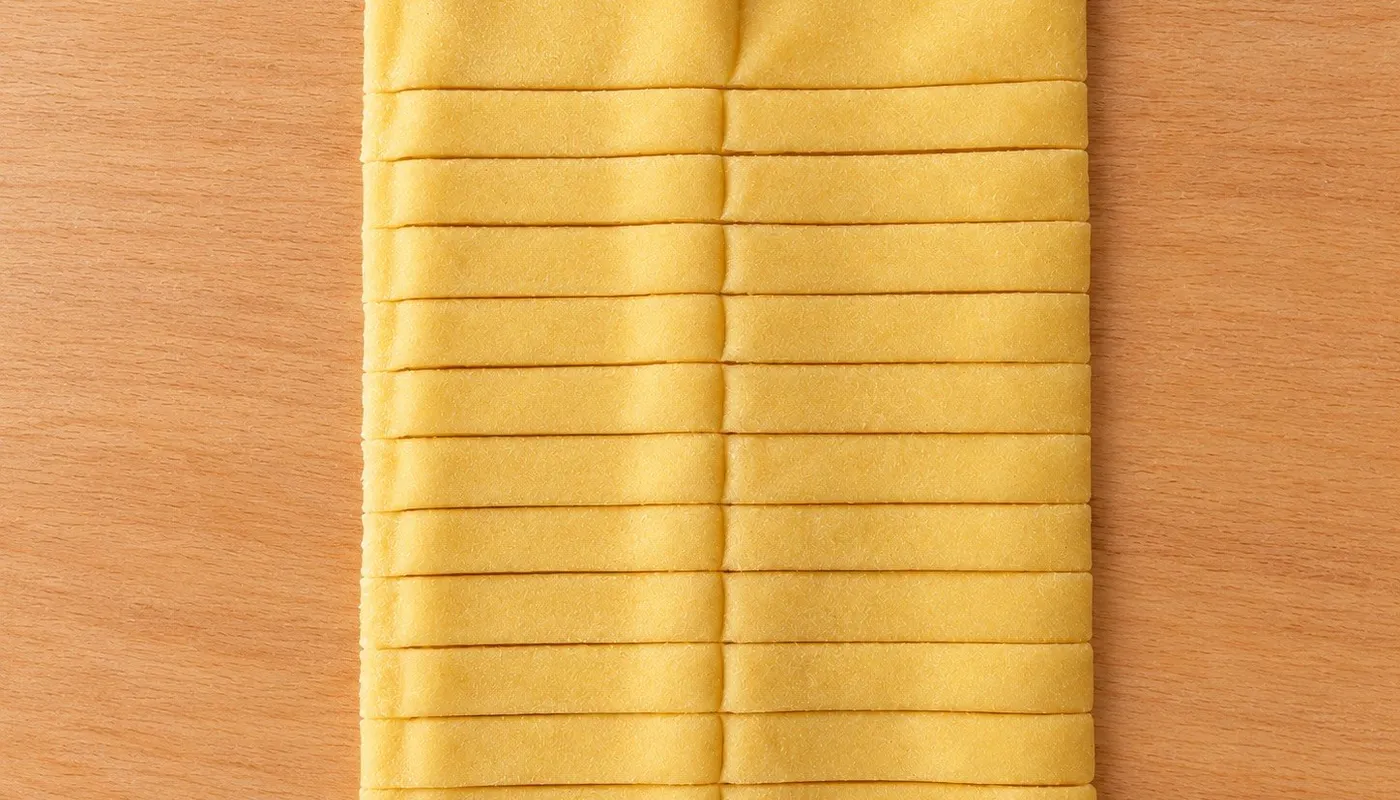
The queen of the Romagna sfoglia wants body. One millimetre raw, ribbons of 8 mm cut with a knife from the rolled up sheet. With a meat ragù, as in our tagliatelle al ragù, a thinner sheet would break up in the pan as you toss it.
Tagliolini
These are the fine version of tagliatelle: a slightly thinner sheet, 0.8 mm, cut at 2 to 3 mm. They are often made with the yolks only dough, which holds up better. They cook in a minute and go well with delicate dressings: butter and sage is their Sunday best, and along the Romagna coast the pairing with fish ragù is common and hugely appreciated.
Cappelletti
The thinnest sheet of all. The squares are small, 4.5 to 5 cm, and a cappelletto is closed by folding the pasta into three layers along the rim: if the sheet is not extremely thin, that rim stays hard after cooking in the broth. The azdora, the woman who ran the farmhouse kitchen, rolled it until she could make out the colour of the filling through the pasta. The differences from tortellini, which have another thickness and another size, are set out in cappelletti or tortellini.
Tortelli, ravioli and cappellacci
Here the filling is generous and soft, so the sheet can carry a little more body: 0.8 to 1 mm. The squares run from 6 to 8 cm for herb tortelli and ravioli, up to 7 to 8 cm for cappellacci di zucca, the pumpkin ones, which are folded like a handkerchief.
Garganelli
The 3 to 4 cm square is rolled around a stick while being pressed onto the comb, and the pasta has to be thin enough to close properly but sturdy enough to keep the ridges: 0.8 to 1 mm. Too thin and the ridges vanish in the pot; too thick and the little tube stays open.
Lasagne
The sheet for the oven can be the thickest, 1 to 1.2 mm, because it has to carry layers of ragù and béchamel and a long bake. The rectangles are cut to fit the dish; the green sheet made with spinach follows the same measurements.
Maltagliati
These are the offcuts of the sheet, cut into irregular diamonds and triangles of 3 to 4 cm. The thickness is that of tagliatelle or even a shade more: with beans they have to survive cooking in the soup.
Strozzapreti
They are not in the thickness table because they are not a sheet at all. The dough is flour and water, without eggs, and the pasta is rolled out roughly to 2 to 3 mm, cut into strips and rolled between the palms, snapping off lengths of 8 to 10 centimetres with your fingers. We cover them in the recipe for strozzapreti alla romagnola.
How to measure the thickness
You do not need a gauge, although anyone who has one at home is welcome to have fun with it. Three tests are enough.
- The light test: hold the sheet up in front of the window. At 1 mm you can see the grain of the wooden board through it; at 0.5 mm you can see the outline of your hand behind the pasta, with the fingers distinct.
- The fold: fold a flap of the sheet over on itself and look at it edge on. Two layers of tagliatelle sheet come to the thickness of a two euro coin; two layers of cappelletti sheet come to that of a ten cent coin.
- The ruler: cut a strip, roll it tightly on itself for ten turns and measure the diameter of the little roll. Divided by twenty, that gives you the thickness. Ten turns of a 1 mm sheet make a roll about 2 cm across.
A memory from home: our grandmother rolled her sfoglia on the kitchen table, under the window, and every so often she lifted it up against the light. If she could see the bell tower through the pasta, it was ready for cappelletti. If she could only see the sky, it needed another turn of the rolling pin.
If you use a machine
The “Setting (out of 9)” column in the table is a starting point, but the settings are not a standard: 6 on one make can match 7 on another. How to judge them, how to strengthen the strip and what changes compared with the rolling pin are all gathered on the page devoted to using a pasta machine.
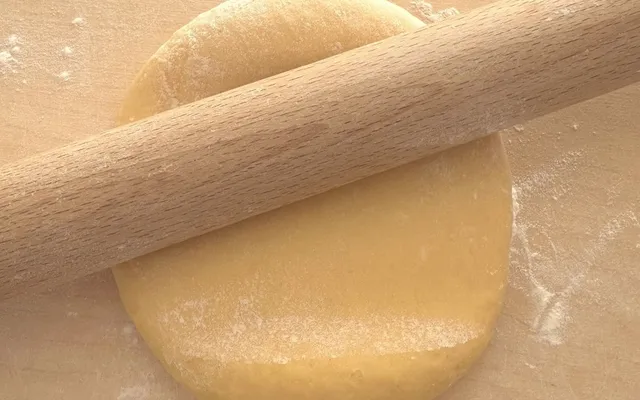
With the mattarello, the long Romagna rolling pin, the same thicknesses come from the movement we explain in the guide on how to roll the sfoglia: the difference is that you feel them under your hands instead of reading them off a dial.
Why thickness changes with the sauce
The last rule is common sense. The sauce is the partner of the pasta, and the two need to carry the same weight.
- Thick, rich sauces (ragù, sausage, mushrooms): a sheet with body, 1 mm or more, that will not crumble in the pan and can stand up to the flavour.
- Light dressings (butter and sage, oil, broth): a thin sheet, one that melts in the mouth and leaves room for the aroma.
- Cooked in broth or in the oven: the sheet goes on cooking in the hot liquid, so for broth it must be thin, while for the oven it can be thick.
- Filling: the tastier the filling, the thinner the sheet can be, because the flavour comes from what is inside.
One last piece of advice for beginners: make the same sheet at two different thicknesses, cook a little of each with the same sauce and taste them side by side. Tables are there to get you started, but the palate decides. In every home each azdora will have her own thickness for every shape, according to the tastes and preferences of the family.
Frequently asked questions
How thick should the sfoglia be for tagliatelle?
About 1 millimetre raw, a little less than a sheet of card. It swells as it cooks and reaches roughly 1.5 mm. By hand, you roll until you can see the pattern of the board through the pasta.
How do you measure the thickness without any tools?
Against the light. Hold the sheet up in front of the window: at one millimetre you can make out the shadow of your hand behind it, at half a millimetre you can read the grain of the board through it. It is the method of the azdore and it is still the most reliable one in a kitchen.
Are Romagna tagliatelle wider than Bolognese ones?
Yes, slightly. In Bologna the official rule sets 8 mm cooked, which means 6 to 7 mm raw; in Romagna people happily go to 7 and sometimes 8 mm raw. It is not a mistake, it is a different taste: a Romagna tagliatella wants to be felt between the teeth.