Making the sfoglia, the sheet of egg pasta, is half a day’s work, and it would be a shame to eat only part of it. The azdore, the women who ran the farmhouse kitchen, knew this: the sheets for Sunday were rolled on Thursday, and the Christmas cappelletti were made at the end of November and left to rest in the cold of the cellar. Today we have a fridge and a freezer, which are far better than a cellar, but the rules for not ruining the work have stayed the same: dry the pasta properly, flour it sensibly and do not keep it longer than you should.
First of all: let it dry
Whatever you plan to do with it, freshly cut pasta has to lose its surface moisture before it is put away. A damp tagliatella put into the fridge sticks to its neighbours, and after a day the nest is one solid block.
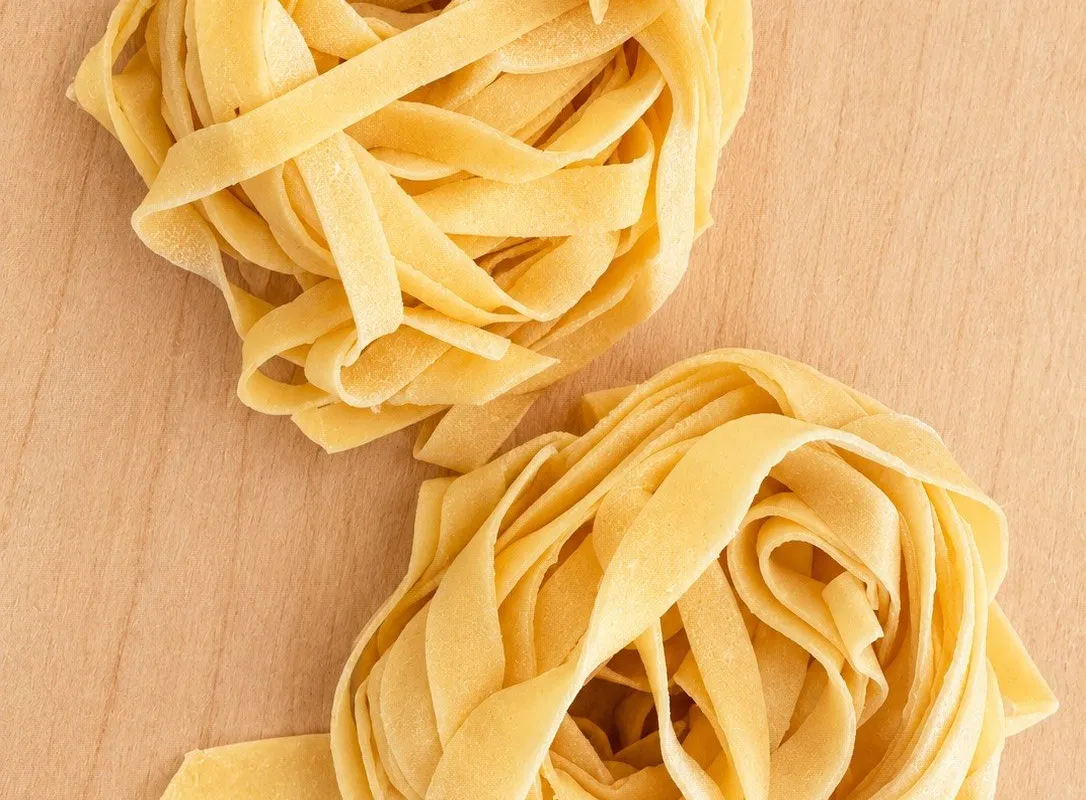
- Lay tagliatelle and tagliolini out in loose nests on the board or on a tray, dusted with semola, durum wheat semolina: it is coarser than type 00 flour and the pasta does not absorb it, so it never turns to glue.
- Leave filled shapes well spaced out on a floured tray, not touching each other.
- Wait 30 to 60 minutes in the kitchen, with the window ajar if the air is humid.
- The pasta is ready to be put away when it feels dry to the touch but is still flexible.
If you plan to cook it the same day, this step is all you need: fresh pasta sits happily for a few hours on the board under a tea towel.
In the fridge: one or two days
The fridge is the answer for pasta you will cook tomorrow. No longer than that: from the second day the egg sheet darkens, takes on an unappealing grey green colour and turns flabby.
- Arrange the nests or the filled shapes on a tray dusted with semola, in a single layer.
- Cover with a clean tea towel, not with cling film: the pasta needs to breathe, otherwise the moisture it releases makes it sweat and stick.
- Put the tray in the least cold part of the fridge, away from strong smelling food.
- If you are not sure how far the drying has gone, it is always safer to freeze.
One warning about filled shapes: if they contain ricotta or raw egg, the fridge buys you 24 hours and no more. There is more on this further down.
In the freezer: the tray and nest method
The freezer is the real modern cellar, and for fresh pasta it works better than the fridge: pasta frozen quickly has no time to darken or stick, and it keeps its texture and flavour almost intact.
- Shape the tagliatelle into nests, or lay the cappelletti out well apart, on a tray lined with baking parchment that fits in the freezer.
- Put the tray in the freezer uncovered for 2 to 3 hours, until the pasta is as hard as a biscuit.
- Only then transfer everything to a food bag, pressing out the air and writing the shape and the date on it.
- Keep for up to 10 months for tagliatelle and simple shapes, 3 months for filled ones.
The trip through the tray is the step everybody skips and the one that makes the difference: if you put fresh pasta straight into the bag, it freezes into a single block and you will have to break the nests apart.
Cooking is done straight from frozen, without thawing. Drop the pasta into water at a hard boil, wait for it to come back to the boil, stir gently to separate the nests and add a minute to the usual timings. Frozen cappelletti in brodo go into boiling broth and cook in 7 to 8 minutes: they are ready when they rise to the surface and stay up for 2 to 3 minutes.
Drying at home: you can, within reason
Drying is the old method and, in some ways, the most delicate. Industrial dried pasta is dried in purpose built chambers at controlled temperature and humidity; at home we depend on the air of the kitchen, and egg pasta is more temperamental than pasta made with semola alone.
How it is done
- Lay the tagliatelle on the drying rack, or hang them in very loose nests over a floured tea towel, or again as single ribbons over a clean broom handle resting between two chairs.
- Choose a room that is dry, airy and out of direct sunlight: light first yellows the yolks and then darkens them.
- Turn the nests every 6 to 8 hours during the first 24 hours, so they dry evenly.
- Wait 24 to 48 hours depending on the season and the thickness. The pasta is ready when it snaps cleanly instead of bending.
- Store it in a tin or a cardboard box, not in an airtight jar, and eat it within 2 weeks.
The risks worth knowing
The pasta can crack if it dries too fast, with the outside shrinking while the inside is still damp. A radiator left on or a strong draught are the usual culprits. The second risk is the opposite: if the air is humid and the pasta takes more than two days, it can go mouldy, and mould on egg pasta is nothing to take lightly. The third is breakage in the pot: dried egg pasta is fragile and often breaks up during cooking.
For all these reasons, if you have a freezer, freeze: these days there is no excuse for running needless risks.
There is a Romagna saying our grandmother repeated whenever we watched her put the pasta away with such care: “La roba fata in cà la va tratèda cun rispet”. What you make at home deserves to be treated with respect. It was not only a matter of flavour: it was a whole morning’s work that was not going to end up as a block of stuck together pasta.
Filled pasta: rules of its own
Cappelletti, tortelli and ravioli are more delicate than plain pasta for two reasons: the filling is moist and wets the sheet from the inside, and it often contains raw egg or ricotta, foods that spoil quickly at room temperature.
- Never leave filled pasta out of the fridge for more than 2 hours. On the day itself, the fridge or the freezer is the only choice.
- In the fridge it lasts 24 hours at most: beyond that the damp filling stains and softens the sheet, and the bacterial risk grows.
- The freezer is the right answer: freeze it straight away on the tray, as described above, and always cook from frozen.
- Never dry filled pasta: the filling does not dry the way the sheet does, and it spoils first.
- If you make the filling the day before, keep it covered in the fridge and only bring it together with the sheet the next day, shortly before putting it away.
Clean hands and a board washed between the filling and the sheet are the rule as always, and even more so in summer.
How long the raw ball of dough keeps
Sometimes you do not even get as far as rolling: the dough is made, but the time has run out. The ball of basic dough keeps like this:
- at room temperature, covered, for up to 2 hours: it is the normal rest, extended;
- in the fridge, wrapped tightly in cling film, until the next day. Take it out an hour before rolling, because cold dough cracks. Expect a slightly darker colour on the surface, which comes away with a thin slice;
- in the freezer, in cling film and a bag, for up to a month. Thaw overnight in the fridge and leave at room temperature for 2 hours before rolling.
The summary table
| What | Room temperature | Fridge | Freezer | Dried |
|---|---|---|---|---|
| Ball of dough | 2 hours | 1 day | 1 month | no |
| Rolled sheet, whole | 1 hour | no | no | no |
| Tagliatelle and tagliolini | 6 to 8 hours | 1 to 2 days | 10 months | 2 weeks |
| Garganelli, maltagliati | 6 to 8 hours | 1 to 2 days | 10 months | 2 weeks |
| Filled pasta | 2 hours | 1 day | 3 months | no |
| Lasagne sheets | 4 hours | 1 day | 6 months | no |
One last piece of advice: the best fresh pasta is still the pasta cooked the same day. Modern life imposes timings and a way of organising ourselves quite different from our grandmothers’, but thanks to how well today’s fridges and freezers perform we can avoid waste and put delicious tagliatelle al ragù on the table on a Tuesday evening too.
Frequently asked questions
How long does fresh egg pasta keep in the fridge?
One or two days at most, well dusted with semola, covered with a tea towel and never sealed airtight. From the second day the pasta darkens and the nests start to stick together. Filled pasta with raw egg in the filling must be cooked within 24 hours.
How do you cook frozen fresh pasta?
Straight from frozen, without thawing it, in plenty of salted water at a rolling boil. Add a minute to the usual timings for fresh pasta: 3 to 4 minutes for tagliatelle, 7 to 8 for cappelletti in broth. If you thaw it first it goes soft and breaks.
Can you dry homemade egg pasta?
Yes, but with some care. You need a dry, airy room, a drying rack and 24 to 48 hours of patience. Egg pasta dried at home is not sterile the way the industrial kind is, so eat it within a couple of weeks and keep it in a container that is not airtight.
Can I freeze the raw ball of dough?
Yes, wrapped tightly in cling film and then bagged, for up to a month. Thaw it overnight in the fridge and leave it 2 hours at room temperature before rolling. It comes out a little less elastic than fresh dough, but for tagliatelle and lasagne it is perfectly fine.