Tradition
Romagna sfoglia: a story of hands, eggs and flour
In Romagna you do not buy pasta: you roll it. It is a gesture that has crossed the centuries almost unchanged, from the farmhouse kitchens with an open fire to the homes of today. This is its story.
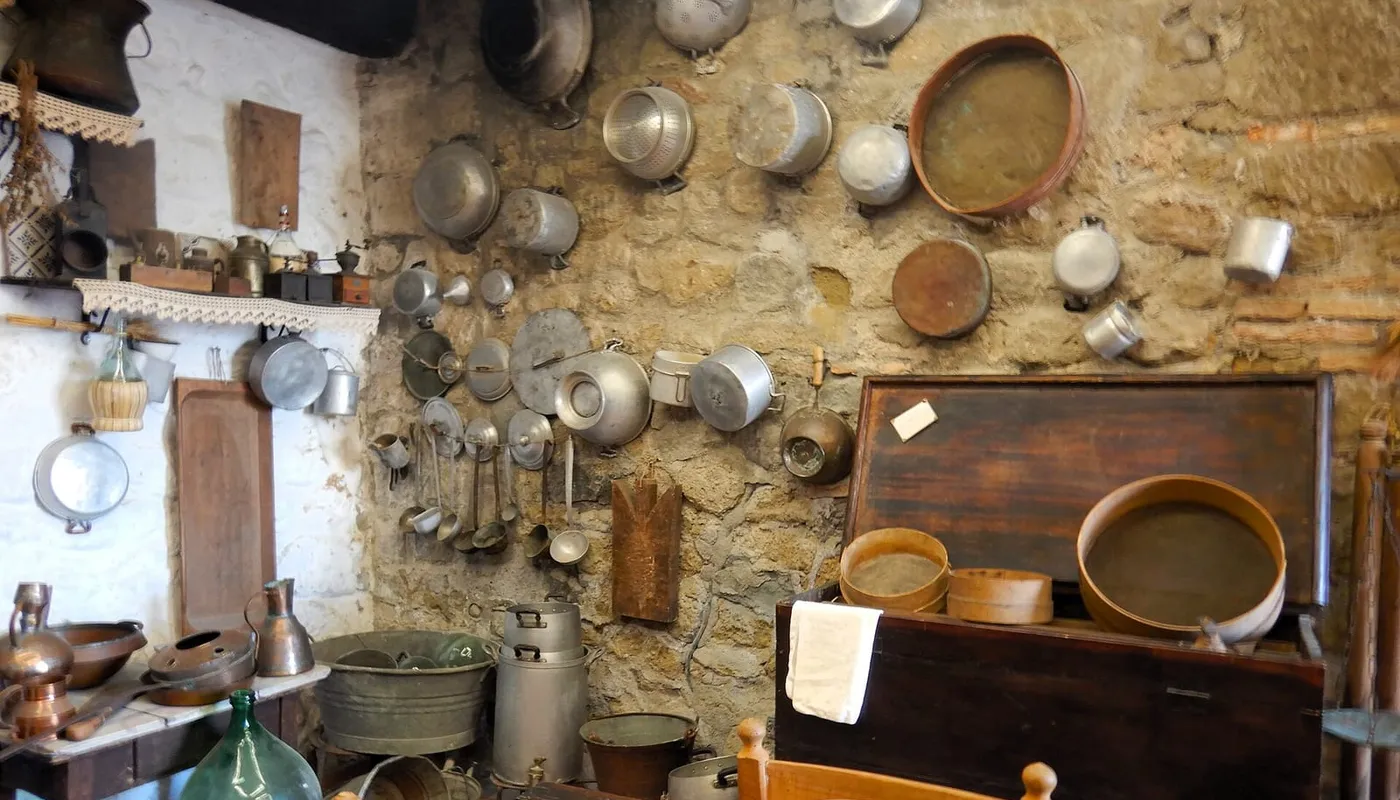
Before the sfoglia: the wheat of the plain
Romagna has always been wheat country. The plain between the Reno and the Rubicone, drained over and over from Roman times onwards, gave soft wheat to the towns and to the countryside for centuries. And where there is soft wheat there is fine flour; where there are farmyards there is a hen house. Eggs and flour were the ingredients a farming family always had to hand, even in the lean months. The sfoglia is born of that simplicity: no water, no oil, just one egg for every fistful of flour, worked until they become a single thing.
The first written records of fresh egg pasta in the Emilia-Romagna area go back to the Middle Ages, in court recipe books and monastery registers. But the story that interests us is not the one of the palaces: it is the one of the kitchens with an open fire, where the sfoglia was rolled every day and written down nowhere. A popular legend has it that tagliatelle were invented by a chef called Zaffirano, or Zaffirino, in 1487 for the wedding of Lucrezia Borgia, as a tribute to her long blonde hair. Making the sfoglia was the yardstick a husband and a mother-in-law used to measure the worth of a young bride; mothers scolded vain daughters with the saying: "You can be as pretty as you like, but if you cannot make the sfoglia you will not get anywhere", meaning that finding a husband would be very hard.
The azdora and the board
In the Romagna farming family, patriarchal and large, the orders came from the azdòr, the head of the household. But the house was held together by her, the azdora: larder, accounts, children, pig, hen house and, every morning, the sfoglia. The board, often as big as the table, was her working tool and her badge of authority. It was said that you judged an azdora by the way she rolled the sfoglia: thin, round, without holes, "so that the board shows through against the light".
«La sfòia la s tira se cor, mia s'al brazi.» You roll the sfoglia with your heart, not with your arms.
The Romagna rolling pin, the s-ciadùr, is long and thin, often more than eighty centimetres: it serves to wind the sheet around it and unroll it with a movement of the hands that widens and thins it at the same time. It is a gesture you do not learn from books but by watching, and that is why it passed from mother to daughter, from mother-in-law to daughter-in-law, for generations. We write about it in the article on who the azdora really was.
Why Romagna has its own shapes
The Romagna sfoglia gives life to the iconic dishes of the local cooking: tagliatelle, maltagliati, cappelletti, and the dishes that make use of leftovers, such as the spoja lorda (sfoglia “dirtied” with what is left of the filling). The sfoglia is the same from Piacenza to Rimini, but what you make of it changes with every river. In Romagna the tagliatella is wider than the Bolognese one, because the farmhouse ragù had less meat and more tomato and wanted a pasta that would "hold". The cappelletto has a filling with more cheese and no cured pork: in the countryside raviggiolo and formaggio di fossa were always there, cured meats and Parmesan only on feast days.
Then there are the shapes that have little to do with egg pasta but that tell the same story of a kitchen that wasted nothing: the passatelli, made with stale bread and Parmesan; the strozzapreti, only water and flour, when there were no eggs or they were sold at the market; the maltagliati, the offcuts of the sheet thrown into the beans.
From the village festivals to the sfogline
In the twentieth century the sfoglia leaves the kitchen at home and becomes a public identity. The village festivals, the cappelletti and passatelli feasts, the sfoglia contests between the azdore of the hamlets: fresh pasta becomes the way Romagna tells its own story. Pellegrino Artusi, a Romagnolo from Forlimpopoli, put it down in black and white in 1891 in his La scienza in cucina e l'arte di mangiar bene, and ever since then tagliatelle and cappelletti have had an "official" version to measure themselves against.
Today the azdore are gone, or almost. In their place are the sfogline: women, and more and more men, who roll the sfoglia in workshops, in restaurants, on courses. The gesture is the same. Only the person watching has changed: no longer a silent daughter-in-law beside the board, but anyone who wants to learn it.
Making the sfoglia is an ancient gesture, but an iconic one for the whole of Italian cooking, and that is why even the great, celebrated chefs of today put fresh pasta dishes on their menus: not just a custom of traditional Mediterranean cooking, but innovative reinterpretations of tradition. To name just two: the famous “Uovo in raviolo” of the San Domenico restaurant in Imola, and Massimo Bottura’s irresistible “Tortellini in crema di Parmigiano”.
Why it is still worth making
You could just buy it. Industrial fresh pasta is good, the pasta from artisan makers often excellent. But rolling the sfoglia at home is another thing altogether: it is half an hour in which the hands work and the head stops, it is a lunch with a story to tell, it is a knowledge that is not lost as long as somebody uses it. That is why we at Du Caplet keep doing it. We are not jealous of our recipes, which we tell you not as a list of ingredients but as a story handed down from one generation to the next. We would like to rekindle in you the love of cooking, and of that ancient, beautiful gesture of cooking for the people you love. If you want to try, the sfoglia school begins with the first egg.
Frequently asked questions
How long has the sfoglia been made in Romagna?
Fresh egg pasta is documented in Emilia and Romagna at least from the Middle Ages, but the domestic ritual of the sheet rolled by hand as we know it takes shape between the eighteenth and the nineteenth century in the farmhouses, when eggs and flour were the few ingredients always at hand.
What is the difference between Romagna and Emilia sfoglia?
The base is the same: eggs and flour, no water. What changes is the shapes and the habits: in Romagna the tagliatella is wider, the cappelletto has more cheese and no cured pork in its filling, and the sfoglia often sits next to more rustic dishes such as passatelli and strozzapreti.
What does azdora mean?
Azdora (from the dialect azdòr, "the one who rules") is the woman who governed the Romagna farmhouse: kitchen, larder, accounts and children. The sfoglia was her daily gesture and her calling card.
From the story to the table
The recipes that tell Romagna
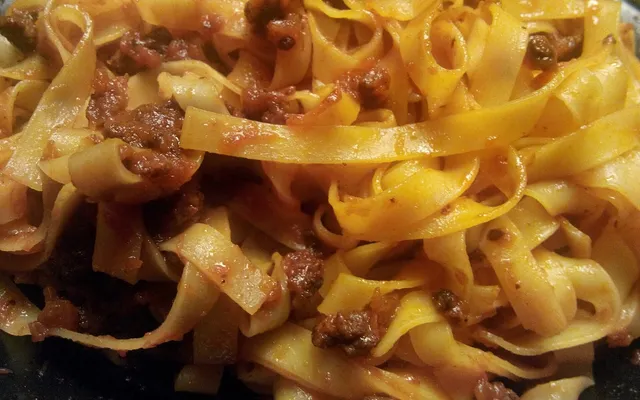 Tagliatelle
Tagliatelle al ragù
The Sunday dish, the way our grandmother made it
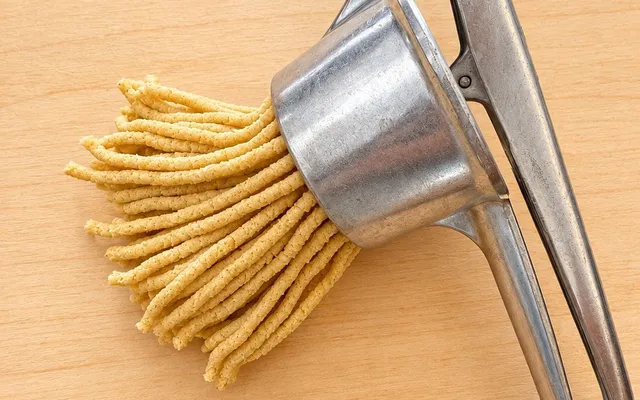 Passatelli
Passatelli in brodo
Bread, cheese and eggs: the broth of feast days and leftovers
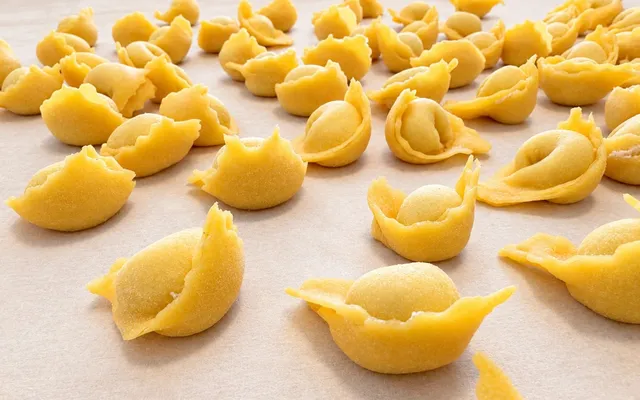 Cappelletti
Cappelletti in brodo
The Christmas first course, folded by hand around the table