Anyone who has watched an azdora, the woman who ran the farmhouse kitchen, roll out a sfoglia remembers it: the long rolling pin running back and forth, the pasta wrapped and unwrapped in a second, the yellow disc growing until it covers the whole board. It looks like a conjuring trick, but it is pure technique, and it can be learned. Here we explain the movements one by one, with the reason behind each, from the first push of the rolling pin to the finished disc.
You start, of course, from a well made and well rested dough: if you have not read it yet, the guide to the basic sfoglia dough comes before this one.
The long rolling pin, which in Romagna is called the sciadùr
The Romagna mattarello, the long pasta rolling pin, has no handles. It is a smooth stick of beech, 80 to 100 cm long and 3 to 4 cm across. Your hands rest directly on the wood and slide along its whole length: that is what lets you stretch a sheet as wide as the board in a single pass, and above all what lets you wrap the pasta round it and unwrap it again.
New wood needs to be seasoned in the kitchen: the first few times, dust it well with flour and run a scrap of dough over it, so the pores close up. After use it is cleaned with a dry cloth or with the scraper, never with water, because it swells and warps. The guide to sfoglia tools tells you what to look for when you buy one.
Posture and work surface
Before the first stroke, settle yourself properly. The azdore rolled their sfoglia on a board set on the kitchen table, standing, with the table at hip height.
- The board must not move: if it slides, put a damp tea towel underneath it.
- Stand with your feet slightly apart and your weight a little forward.
- The power comes from your trunk and shoulders, not from your wrists: if your hands hurt after ten minutes, you are pushing with your fingers.
- Keep a small bowl of flour and the scraper within reach.
Dust the board with a little flour. Very little: the sheet needs a trace of friction against the wood, otherwise it slides instead of spreading.
From ball to disc
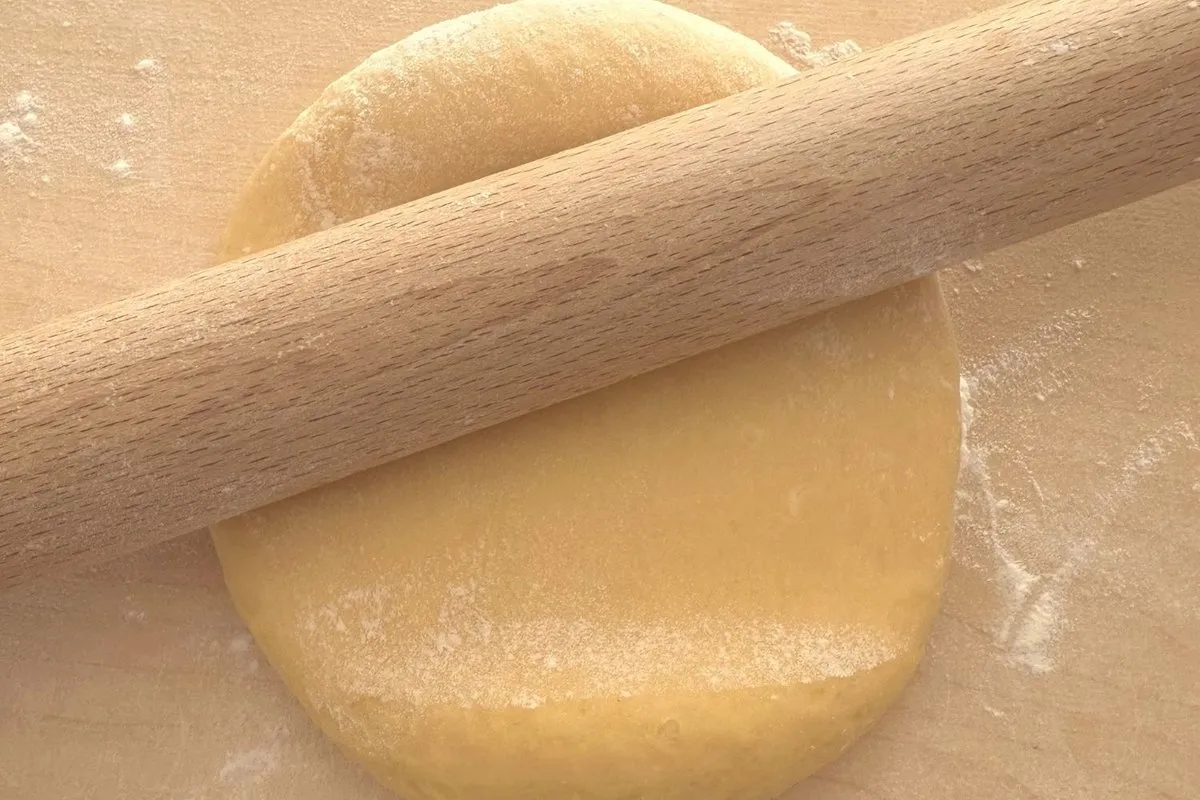
The first stage is the easiest: turning the ball into a disc about a centimetre thick and as wide as a dinner plate.
- Flatten the ball with your palm, then flatten it further with a few strokes of the rolling pin, working from the centre outwards.
- Turn the disc a quarter turn after every pass, so that it grows round rather than oval.
- Do not press on the edges: they are already thinner than the centre, and squashing them makes them ragged.
- When the disc is 25 to 30 cm across, dust it lightly and move on to the second stage.
A disc that is round from the start saves you effort later. If it comes out shaped like a potato, stop and correct it now with a few well aimed strokes along the short sides.
The movement that makes the difference: wrapping and unwrapping
From here on the rolling pin no longer flattens the pasta, it stretches it. This is the part that sets the Romagna sfoglia apart from all the others.
-
Lay the pin on the edge of the disc furthest from you and wrap the sheet onto the wood, rolling it towards you until it is all gathered up.
-
With your hands open on the roll, push it back and forth three or four times. As you do so your hands slide from the centre out towards the ends of the pin: it is this movement that widens the pasta sideways.
In practice, as experience grows so does the dexterity, and the two steps above merge into a single movement: wrapping the sheet onto the pin and, at the same time, sliding your hands from the centre outwards.
-
Unwrap the sheet with a sharp flick forwards, letting it fall back turned by about a quarter turn from where it was. You get that quarter turn by holding the pin slightly at an angle as you unwrap.
-
Repeat: wrap, stretch, unwrap with a turn. Each cycle takes a few seconds and widens the disc by a few centimetres.
-
Every three or four cycles, lift the sheet and dust a veil of flour underneath if you feel it starting to grip.
The secret is lightness. The weight of the pin and of your arms is enough: press too hard and the pasta glues itself to the wood and tears as you unwrap it.
When we were small, our grandmother let us do the last round. She would put her hands over ours and say: “Lasa fè e’ sciadùr, lò e’ sa la strèda”. Let the rolling pin do the work, it knows the way. She meant that force is the enemy of the sfoglia: the wood rolls, and the pasta follows it.
Even thickness and the light test
A perfect sfoglia is the same thickness in the middle as at the edges. The commonest fault is a thick centre with a thin rim, because the pin does more work towards the outside.
- If you see the centre staying thick, wrap the sheet up and stretch it with your hands held still in the middle of the pin for a couple of passes.
- If one side is thinner, unwrap the next time so that side ends up away from your hands.
- Hold the sheet up in front of a window: the light should come through evenly. If you can see the grain of the wooden board through the pasta, you are around a millimetre, the thickness for tagliatelle. For cappelletti go further, until you can make out the outline of your own hand.
The exact measurements shape by shape are in the guide to sfoglia thickness. In time you will learn to feel them under your fingers rather than see them.
When something goes wrong
The sheet tears
If you get tears in the middle or cracks at the edges, the dough is too dry or has not rested long enough. For small holes, fold a flap of pasta over from the edge, press it down with your finger and carry on rolling: it welds shut. Remember that moisture is an essential ingredient in a sheet with good elasticity, so the first few times practise with doughs of 2, at most 3 eggs at a time.
The sheet sticks
If it glues itself to the pin or to the board, the dough is wet or you have been rolling with too much pressure. Lift it away with the scraper, never by tugging with your fingers, dust both faces with flour and start again with a lighter hand. If the kitchen is warm and humid, open a window: the sfoglia feels the air.
Drying before you cut
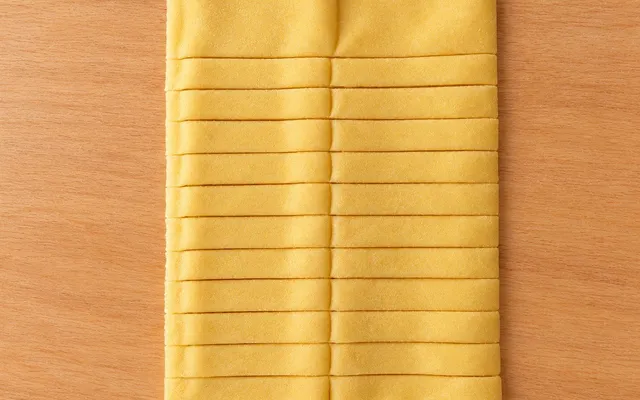
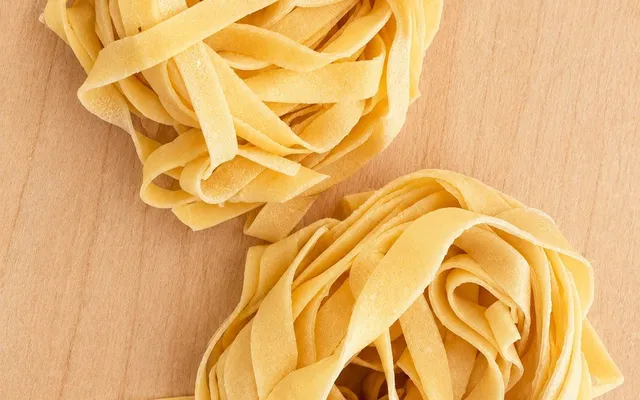
Straight off the pin, the sheet is soft and damp. For tagliatelle and the other cut shapes it should be left to dry for 10 to 20 minutes, spread out on the board and turned over once halfway through. It should end up like a piece of chamois leather: dry to the touch but still flexible, flexible enough to roll up without breaking. Cut it while it is damp and the ribbons stick together; wait too long and it cracks under the knife.
For filled pasta it is the other way round: you work at once, while the sheet is still soft, so that the edges seal themselves without being wetted.
If you use a machine instead
We have no prejudices: a roller machine saves time and effort, and in a small kitchen it is sometimes the only option. We do not cover it here because this guide is devoted to the movement of the hand, but you will find everything, comparison included, on the page about using a pasta machine.
And if you want to learn the rolling pin, there is only one piece of advice: do it often. We tell the story of the azdora in the article devoted to her (who was the azdora), but her secret was a simple one. She rolled a sfoglia every day.
Frequently asked questions
How long does it take to roll out a sfoglia by hand?
For 400 g of flour, a beginner takes 15 to 20 minutes; an azdora takes six or seven. The time drops quickly with practice, because the rolling gesture becomes automatic. Do not stop for too long along the way: the sheet dries as you wait and becomes harder to widen.
Can I use a short rolling pin instead of the long one?
For small quantities yes, but above 300 g of flour a short pin with handles forces you to roll in pieces and makes the wrapping gesture impossible. A smooth wooden stick 80 cm long, with no handles, costs very little and changes everything.
How long does it take to roll a sfoglia by hand?
The first few times a good twenty minutes for 400 grams of dough, but that is time spent learning. After a few weeks it comes down to about ten, and what makes the difference is not strength: it is rhythm, and never stopping halfway.