Piadina · Beyond the sfoglia
Piadina romagnola: the original recipe with lard and testo
It is not pasta, but it is the bread of Romagna
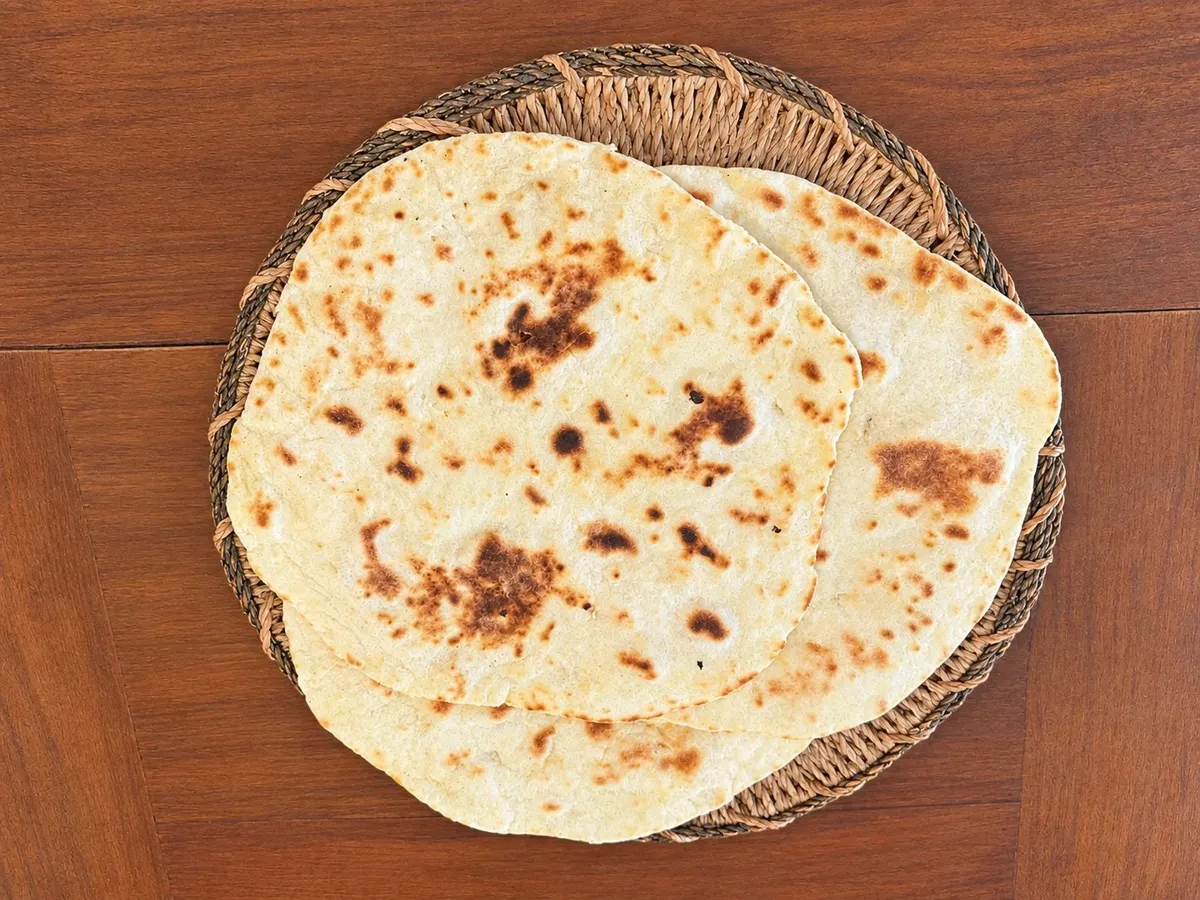
Piadina romagnola is not pasta, and that is why it sits in the Beyond the sfoglia section. But no household in Romagna can avoid telling its story, because piadina is our bread: the one people made on the testo, the flat terracotta plate, when there was no oven; the one that goes with prosciutto on a Sunday; the one you buy at a kiosk on the seafront. Giovanni Pascoli called it the national bread of the Romagnoli, and he was right.
There are four ingredients: flour, strutto (rendered pork lard), water and salt. The rest is technique and hands, the same hands that roll the sfoglia, the sheet of egg pasta, on the board and here instead roll out discs to cook in two minutes.
Thin or thick: Romagna is divided
There is no single piadina. Travelling from Rimini towards Cesena and Forlì, the piadina grows thicker and smaller. The Rimini one is thin, two millimetres or less, and can be thirty centimetres across, soft and foldable: you wrap it around the filling and eat it as you walk. The Cesena and Forlì ones are thick, four or five millimetres, smaller, with a soft crumb that recalls a flat loaf: they are cut into wedges and served in a basket.
The IGP and the family recipe
Piadina Romagnola has held IGP status since 2014, with rules that fix the ingredients (soft wheat flour, water, salt, lard or oil, and any raising agents) and the two types: the classic one, thicker, and the Rimini style, thin and wide. It is a recognition that protected the name from industrial products made who knows where. At home, though, the rulebook counts for little: what counts is a hot testo and a rested dough. If you want to understand how this humble bread made it this far, the page on the story of fresh pasta in Romagna tells you about the cooking of the azdore, the women who ran the farmhouse kitchen, of which piadina was a part.
The testo and the fire
Piadina is cooked on the testo, the disc of fireproof terracotta that sits straight over the flame. A heavy based iron pan or a cast iron testo does the same job. There is one rule: the surface must already be hot, with no fat on it, and the piadina must stay on it for the shortest time, just long enough to be flecked with brown on both sides. The blisters that rise are pricked with a fork, otherwise the piadina inflates like a balloon and cooks badly.
The classic fillings
Squacquerone, a soft fresh cheese from Romagna, with rocket is the filling that made piadina known outside the region: the runny young cheese, the bitterness of the leaves, the hot piadina holding it all together. Then prosciutto crudo, on its own or with squacquerone; grilled sausage with onions; wild greens sautéed with garlic. And finally the sweet version with chocolate hazelnut spread that children ask for at the village festivals, where piadina sits beside strozzapreti and cappelletti on the azdore’s stalls.
At the table
Serve it hot, folded in half, with no plate if you are standing and a paper napkin in hand. If you make a lot of them, stack them in a clean tea towel: the steam keeps them soft until the last guest arrives.
Ingredients
For the dough
For the filling, as you like
Tick the ingredients as you go. Amounts adapt to the number of servings.
Method
-
The dough
On the board or in a bowl, mix the flour, salt and bicarbonate of soda. Add the soft lard in small pieces (or the oil) and rub it between your fingers until the flour looks like damp sand. Pour in the warm water a little at a time and knead for 5 minutes: you want a smooth, soft ball that is not sticky.
-
The balls
Divide the dough into 6 pieces of about 135 g each and round them between your hands. Set the balls on a plate or a tray lined with baking paper and cover them with a tea towel or cling film.
-
The rest
Leave to rest for 30 minutes at room temperature. The gluten relaxes and the piadina rolls out without springing back.
-
Rolling out
Roll each ball out on a floured surface with a rolling pin. For the thin Rimini piadina go down to 2 mm and 25 to 28 cm across; for the Cesena or Forlì one stop at 4 to 5 mm and 20 cm. Turn the disc a quarter turn after every pass to keep it round.
-
The cooking
Heat the terracotta testo or an iron pan over medium high heat, with no fat. Lay the piadina down and prick the blisters with a fork as soon as they form. Cook for 1 to 2 minutes a side: it should be flecked with brown, not blackened.
-
Filling and serving
Fill the piadina while it is still hot, fold it in half and serve at once. If you are cooking a lot of them, stack them in a tea towel: the steam keeps them soft for half an hour. Or cut them into quarters and serve them at the table in the bread basket, as if they were bread.
Frequently asked questions
Is piadina made with lard or with oil?
The traditional recipe uses strutto, rendered pork lard, which gives the crumbliness and that faintly buttery flavour you taste in the piadine sold at the kiosks. Extra virgin olive oil is allowed by the IGP rules too and gives a lighter, softer piadina, but a less flaky one.
Does piadina need yeast?
No, piadina is not a leavened bread. A pinch of bicarbonate of soda or baking powder only helps the thick version stay soft; the thin Rimini one does not need it. Without any raising agent it is still good, just a little denser.
What is the testo for piadina?
It is the flat disc of fireproof terracotta on which Romagna has always cooked piadina, set straight over the flame. Many people now use a cast iron testo or a heavy based iron pan: the result is very similar, as long as the surface is properly hot and dry.
What do you fill piadina romagnola with?
The classics are squacquerone and rocket, prosciutto crudo, sausage with onions, and wild greens sautéed in a pan. But there is only one real rule: few ingredients, filled while hot, and the piadina folded in half.
Keep kneading
Similar recipes
 Gnocchi
Potato gnocchi with butter and sage
Thursday is gnocchi day
 Strozzapreti
Strozzapreti romagnoli
The weekday pasta, no eggs and no equipment
 Tagliolini
Tagliolini with butter and sage
The finest cut of the sfoglia, for a dressing that does not cover it