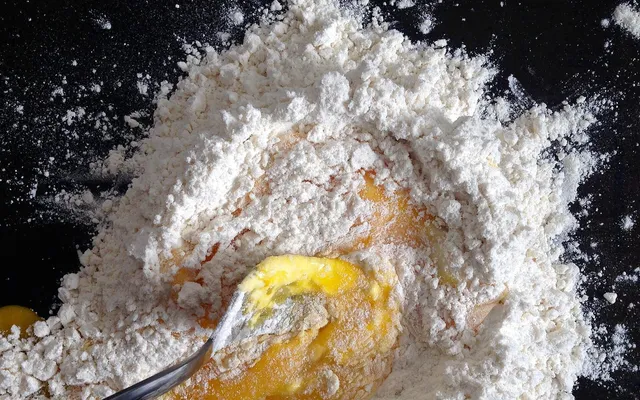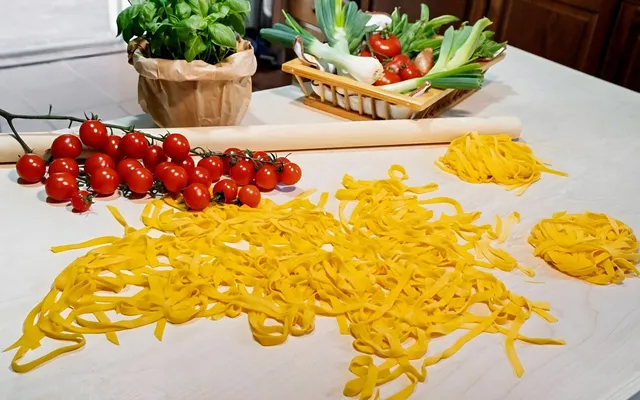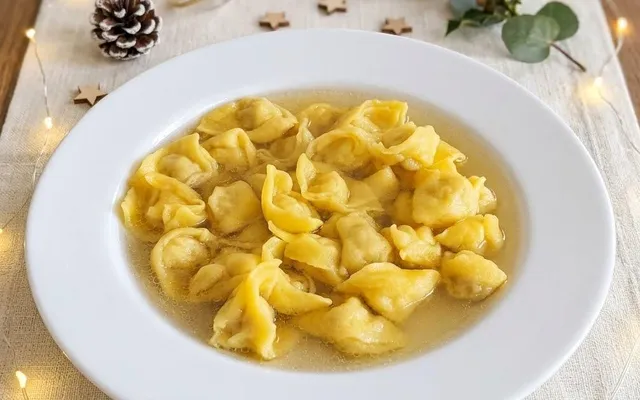
For fresh pasta you want, ideally, whole fresh grade A eggs, counting as a rule one medium to large egg, about 50 to 60 g out of the shell, for every 100 g of flour. That is the starting rule of every recipe on this site, and the exact quantities by the scale are in the guide to the basic sfoglia dough. Here we talk about what comes before: which eggs to buy.
Whole eggs
The white contains proteins that give the dough structure and elasticity and make it easier to roll out. The yolk brings the fat, the deep golden colour and more richness of flavour. For the classic sfoglia you use whole eggs: it is the two together that make a pasta that rolls thin and stays soft in the mouth.
Freshness and origin
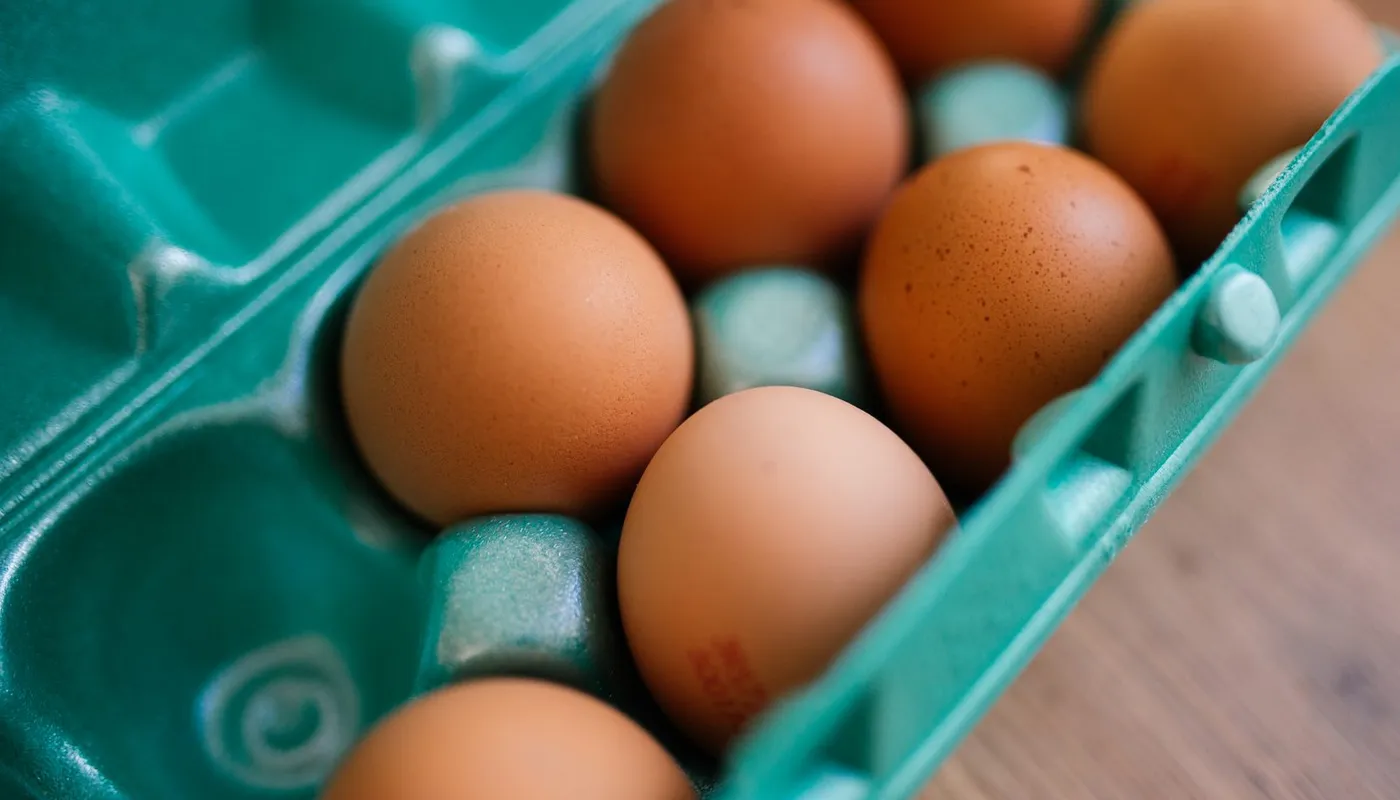
Choose very fresh eggs, better if local and from free range hens, for a lively colour and an honest flavour. Eggs for the sfoglia should be used at room temperature: take them out of the fridge half an hour before you start. To know how the hens were kept, read the code stamped on the shell: in the EU the first digit means 0 for organic, 1 for free range, 2 for barn and 3 for caged. The dates on the carton tell you the rest.
The colour
The eye wants its share too. The hens that once scratched around the farmyard were fed on a mash of stale bread, vegetables and cracked maize; today “complete” feeds are common. The eggs are just as fine and healthy, the only trouble is that with ordinary eggs of any kind, organic, free range and so on, your pasta will certainly be good, but hardly beautiful.
Every Italian supermarket sells eggs labelled “a pasta gialla” or “da sfoglia”, yellow yolk eggs, which give the pasta a brighter, more vivid and more appetising golden colour. The deeper colour comes from the fact that the hens producing this kind of egg are fed on a mix richer in carotenoids, which are nothing more than the natural pigments of maize and grass. They are exactly as safe to eat as any other egg.
Eggs in cartons
Here the traditionalists will raise their shields, but we live in the twenty first century and try to appreciate the good things. Pasteurised liquid eggs are simply fresh eggs that are shelled, homogenised and then pasteurised, to be packed in cartons like the ones milk comes in. Since we drink milk and cream and eat yoghurt preserved by the same process, we should not be prejudiced against eggs.
They are safe, zero salmonella, and they are ideal and recommended for recipes that call for raw egg, such as tiramisù or mayonnaise, but they can be used for everything, sfoglia included. Liquid eggs come in as many kinds as fresh ones: from free range hens, organic, and in the yellow yolk version too. To measure them you only need the scale: 55 g equals one medium egg, and the weight rule explained in the dough guide works exactly the same.
With the right eggs, the rest is down to the flour and your hands: ten minutes of kneading, half an hour of rest, and the sfoglia comes out as yellow as it should.
Frequently asked questions
How many eggs do I need for 100 g of flour?
As a rule one medium to large egg, that is 50 to 60 g out of the shell, for every 100 g of flour. If your eggs are smaller or larger, weigh them: the dough guide explains the rule of the weight of the eggs multiplied by 1.66.
Why does my egg pasta come out pale?
The colour depends almost entirely on the yolk, and the yolk depends on what the hen eats. With ordinary eggs the pasta is good but pale; the eggs sold in Italy as "a pasta gialla" or "for sfoglia" come from hens fed on more carotenoids and give a bright yellow.
Can I use pasteurised liquid eggs for the sfoglia?
Yes. They are fresh eggs shelled, homogenised and pasteurised: safe, with no salmonella risk, and fine for everything, sfoglia included. They exist in a yellow yolk version too. Measure them by weight: 55 g equals one medium egg.